
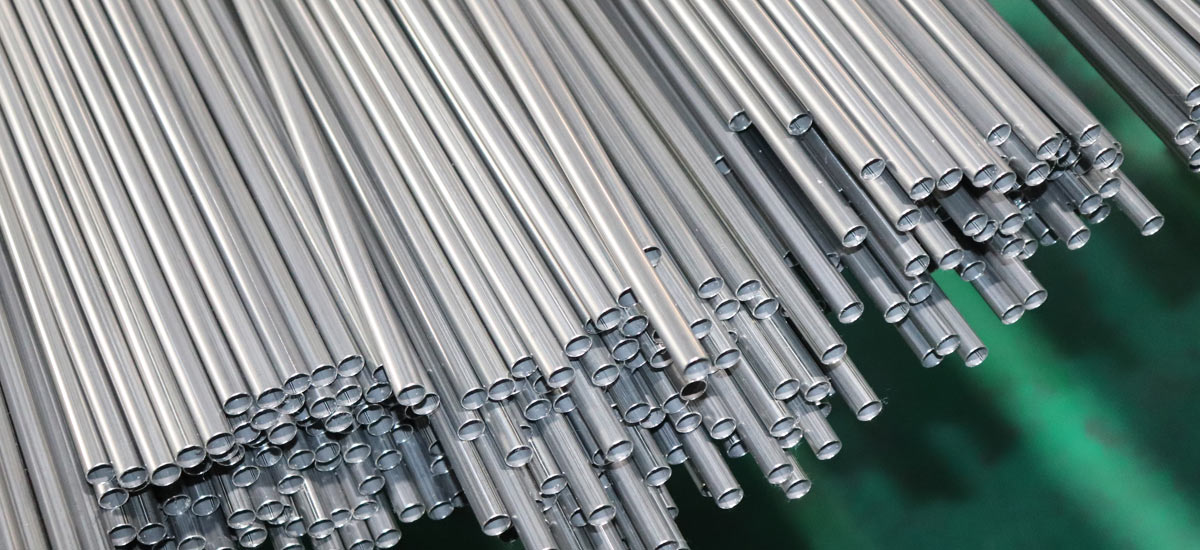
Stainless steel tubes play a crucial role across industries. The material ensures durability, safety, and long-term performance, whether used for structural components, fluid transport, or mechanical systems. The properties of stainless steel tubes determine how effectively they perform under industrial conditions.
Understanding the characteristics of ASTM stainless steel tubes is essential for selecting the right material for specific applications. From high strength to corrosion resistance and precision manufacturing processes like welded & drawn stainless steel tubes, each property contributes to performance and reliability. Below are the key properties of stainless steel tubes that matter in industrial applications.
1. Excellent Corrosion Resistance
One of the most important properties of stainless steel tubes is their outstanding corrosion resistance. Stainless steel material contains iron, chromium, nickel and molybdenum, depending on grade, which forms a protective oxide layer on the surface, preventing rust and deterioration when exposed to moisture, chemicals, or harsh environmental conditions. Because of this protective layer, ss tubes can maintain structural integrity and performance even in aggressive environments, reducing maintenance costs and increasing service life.
Corrosion resistance makes stainless steel tubing ideal for industries where exposure to water, chemicals, or high humidity is common.
Typical industrial applications include:
- Chemical processing plants
- Oil and gas facilities
- Food and beverage manufacturing
- Pharmaceutical production
- Marine and offshore environments
304 stainless steel tubes have approximately 18% chromium and 8% nickel, which fare in moderate environments, while 304L, 316L & 321 are better suited for corrosion resistance.
2. High Strength and Durability
Strength is a defining feature of industrial stainless steel tubes. The excellent strength-to-weight ratio allows tubes to handle heavy loads, high pressures, and mechanical stress without deformation. Industries rely on durable ss tubes because they maintain their shape and performance even under demanding operational conditions.
This strength makes stainless steel tubing suitable for:
- Structural frameworks
- Mechanical components
- High-pressure pipelines
- Heat exchangers
- Automotive systems
316 stainless steel boasts a higher strength and durability than 304 ss tubes.
3. Precision Manufacturing
Industrial applications often require tight tolerances and smooth surface finishes. This is where welded & drawn stainless steel tubes provide a significant advantage.
In the manufacturing process, stainless steel strips are rolled and welded to form a tube, after which the tube is small-diameter, thin-walled cold-drawn to achieve precise dimensions and improved mechanical properties.
Welded & drawn stainless steel tubes offer several advantages such as improved dimensional accuracy, enhanced mechanical strength, uniform wall thickness and smooth surface finish Because of these benefits, welded drawn & annealed stainless steel tubing is commonly used in industries that require precision components, including instrumentation, automotive manufacturing, and engineering applications.
4. Improved Mechanical Properties Through Annealing
Another important feature of welded drawn & annealed stainless steel tubes is the annealing process. Annealing involves heating the material to a specific temperature and then cooling it slowly to relieve internal stresses.
This process improves several critical properties:
- Increased ductility
- Reduced brittleness
- Enhanced corrosion resistance
- Improved formability
For manufacturers and fabricators, Welded and Drawn Stainless Steel tubing that has been annealed offers better workability during bending, welding, and machining processes. This is particularly important for industries that require complex fabrication or precise component manufacturing.
5. Temperature and Pressure Resistance
Many industrial environments involve extreme temperatures and pressure conditions. Stainless steel tubes for industrial applications are designed to withstand these challenges without compromising structural integrity.
Stainless steel maintains its strength at both high and low temperatures, making it suitable for:
- Thermostatic solutions
- Boilers and heat exchangers
- Power generation plants
- Petrochemical processing units
- Industrial heating systems
This ability to perform in demanding environments makes industrial stainless steel tubes a reliable material for applications where safety and performance are critical.
6. Hygienic and Easy to Maintain
Certain industries require materials that meet strict hygiene standards. Stainless steel is non-porous and easy to clean, which prevents contamination and bacterial growth.
As a result, stainless steel tubing is widely used in:
- Food processing equipment
- Beverage production systems
- Pharmaceutical manufacturing
- Medical and laboratory equipment
The smooth surface finish of welded & drawn stainless steel tubes also helps reduce product buildup, making cleaning and maintenance easier.
7. Long Service Life and Cost Efficiency
While stainless steel tubing may have a higher initial cost compared to some alternative materials, its long service life provides significant long-term value.
For industrial buyers, this translates into:
- Lower lifecycle costs
- Reduced downtime
- Improved operational efficiency
Over time, industrial stainless steel tubes offer a cost-effective solution for demanding environments.
Choose the right stainless steel tubes and tubing solutions for industrial uses with Arya Tubes. With advanced manufacturing processes, get tubing that meets the strict quality standards required by today’s industries. The major advantage of stainless steel tubes for industrial applications is their versatility. Stainless steel tubing is available in a wide range of grades, diameters, wall thicknesses, and finishes to suit different industry requirements.
This wide variety helps select tubing that matches the specific performance requirements of their systems.