
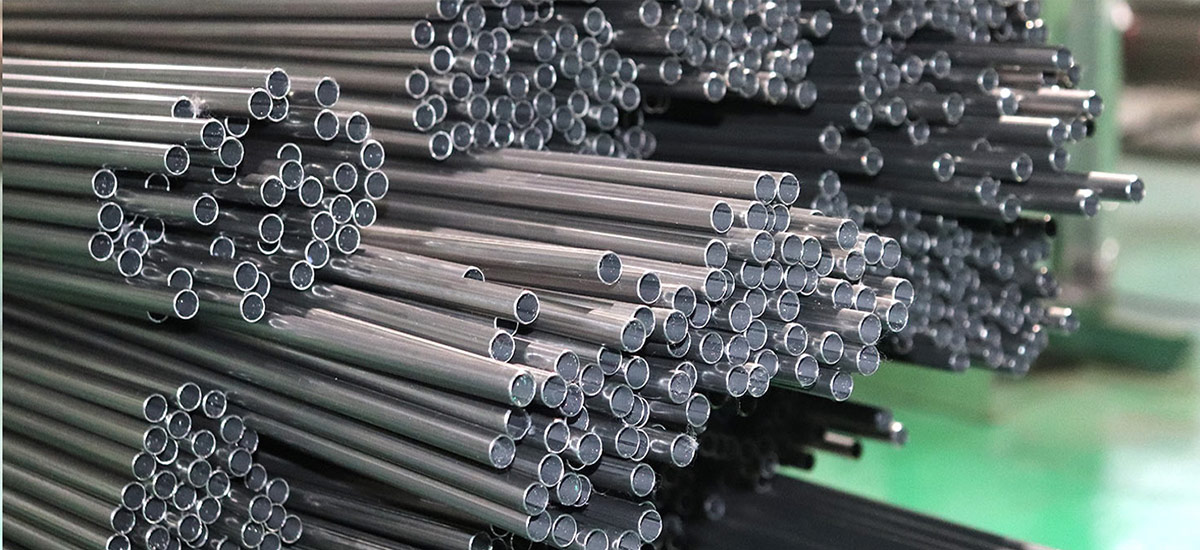
Looking for stainless steel tubes for industries such as thermostatic applications, medical, automotive, food processing, oil & gas, chemical handling, and pharmaceuticals? Understanding common stainless steel tube grades helps select the right material for performance, regulatory compliance and cost efficiency. Their corrosion resistance, strength, hygiene, and durability make them ideal for demanding industrial applications
Understanding Stainless Steel Tube Grades
Stainless steel tubes are primarily composed of stainless steel with the addition of iron and chromium (minimum 10.5%), with added elements such as nickel and molybdenum depending on grade. Chromium forms a passive oxide layer that protects against corrosion. Austenitic stainless steel grades, particularly the 300 series, dominate tubing applications due to excellent corrosion resistance, superior weldability and formability, non-magnetic properties in the annealed condition and high temperatures capacity
The most widely used grades include:
- 304 stainless steel tubing
- 304L stainless steel tubing
- 316L stainless steel tubing
- 321 stainless steel tubing
Each grade is engineered for specific operating environments.
304 Stainless Steel Tubes
One of the most commonly used grades worldwide, 304 stainless steel tubes have approximately 18% chromium and 8% nickel, it offers reliable corrosion resistance in mild and moderately corrosive environments.
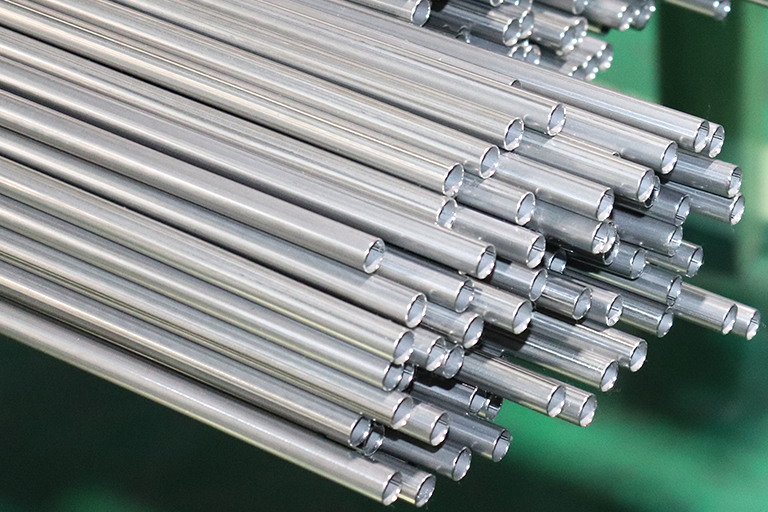
Why 304 Stainless Steel Tubes are chosen?
- Excellent oxidation resistance up to 870°C
- Non-magnetic in the annealed condition
- Good weldability and fabrication properties
- Cost-effective for general industrial use
Common applications include:
- Food processing equipment
- Architectural tubing
- Thermostatic application including geysers, heaters and heating elements
- HVAC systems
- Exhaust systems
- Structural components
For general-purpose use, welded 304 stainless steel tubing remains the most economical and widely specified option.
304L Stainless Steel Tubes
304L stainless steel tubing is the low-carbon version of 304. The “L” stands for low carbon content, typically below 0.03%.
Why 304L Stainless Steel Tubes are chosen?
- Reduced risk of carbide precipitation during welding
- Improved corrosion resistance in welded structures
- Suitable for heavy-gauge welded applications
- Preferred for pressure vessels and structural fabrication
304L is ideal when post-weld heat treatment is not feasible. It is commonly used in:
- Chemical processing equipment
- Storage tanks
- Piping systems
- Structural welded assemblies
For buyers requiring corrosion resistance combined with weld integrity, 304L stainless steel tubes are often specified.
316L Stainless Steel Tubes
316L stainless steel tubing contains molybdenum, which significantly enhances resistance to pitting and crevice corrosion in chloride environments.
Why 316L Stainless Steel Tubes are chosen?
- Superior resistance to acids and chlorides
- Excellent performance in marine environments
- High resistance to chemical exposure
- Biocompatibility for medical applications
316L stainless steel tubing is widely used in:
- Pharmaceutical processing
- Marine applications
- Chemical plants
- Medical-grade stainless steel tubing
- Food and beverage industries
- Thermostatic applications such as heaters & geysers
For environments exposed to saltwater, chemicals, or bodily fluids, 316L is the preferred choice over 304.
321 Stainless Steel Tubing: High-Temperature Stability
ASTM 321 stainless steel tubes is titanium-stabilized to prevent carbide precipitation during high-temperature exposure.
Why Use 321 Stainless Steel Tubes?
- Excellent high-temperature resistance
- Improved intergranular corrosion resistance
- Maintains strength under prolonged heat exposure
- Suitable for thermal cycling environments
Common applications include:
- Aerospace components
- Heat exchangers
- Exhaust manifolds
- High-temperature processing equipment
For industries requiring long-term exposure to elevated temperatures, 321 stainless steel tubing offers superior structural stability.
Manufacturing Processes for ASTM 304, 304L, 316 & 321: Welded, Drawn & Annealed Stainless Steel Tubes
Beyond grade selection, manufacturing processes also impact performance.
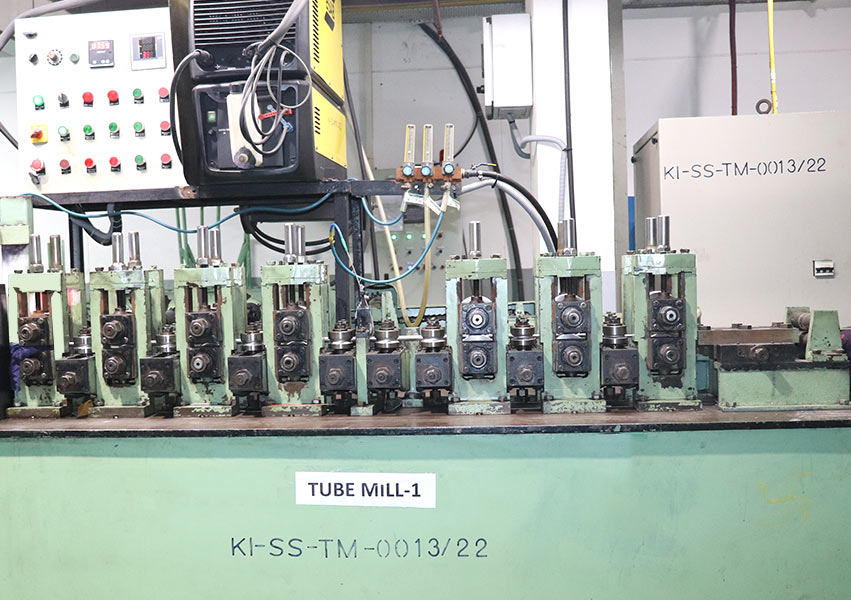
Welded Stainless Steel Tubesare produced by rolling flat strip into a cylindrical shape and welding along the seam (often TIG welding). The cost-effective production has consistent wall thickness ideal for non-high-pressure applications
Annealed Stainless Steel Tubes
Annealing involves controlled heating and cooling to relieve internal stresses. Annealed SS tubes have improved ductility, enhanced corrosion resistance, easier bending and forming and reduced hardness
Annealed stainless steel tubes are preferred where flexibility and fatigue resistance are required.
Welded, Drawn and Annealed Stainless Steel Tubes
This precision process enhances dimensional accuracy and mechanical properties. The ss tubes have superior surface finish, tight tolerances and higher tensile strength ideal for instrumentation and hydraulic systems.
Medical Grade Stainless Steel Tubing
Medical stainless steel tubing requires strict compliance with standards such as ISO 9626.
- 304 for general medical devices
- 316L for surgical and implant-grade applications
Comparing 304 vs 304L vs 316L vs 321
|
Grade |
Best For |
Key Advantages |
|
304 |
General industrial use |
Cost-effective & versatile |
|
304L |
Welded structures |
Reduced weld corrosion risk |
|
316L |
Chemical & marine |
Superior pitting resistance |
|
321 |
High-temperature use |
Heat stability |
Choosing Stainless Steel Tube Grades
Selecting the right stainless steel tube grade depends on corrosion exposure, temperature requirements, weldability needs, and compliance standards.
- Choose 304 stainless steel tubes for cost-effective general use.
- Select 304L for welded fabrication.
- Opt for 316L stainless steel in aggressive or chloride environments.
- Use ASTM-321 stainless steel for high-temperature applications.
Working with an experienced SS tube manufacturer, exporter & supplier such as Arya Tubes ensures quality, durability, and long-term performance in critical industrial applications. Specialist in cold-drawn thin-wall small diameter stainless steel tubes and customized sizes compliant with ISO certification and BIS 17678:2022 regulations for industrial applications. Catering to ASTM-certified stainless-steel grades – 304, 304L, 316L and 321 for various industries and available for customization on request, choose the right grade of stainless steel tubes.
Related Blog: